
How Often Should You Clean Your Dryer Vent in Dallas, TX?
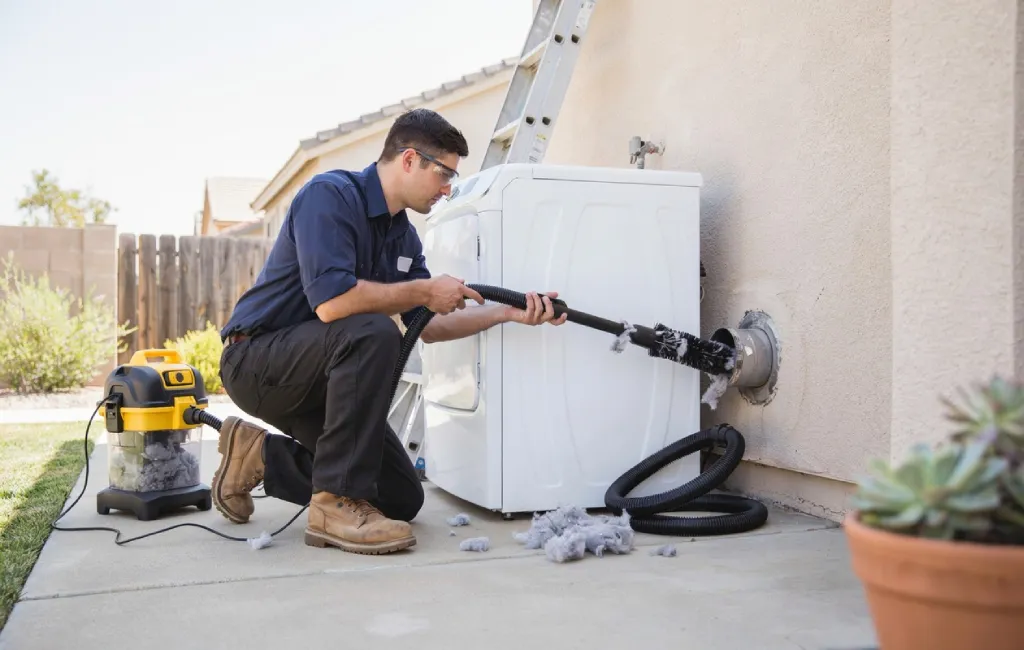
If your dryer is taking two cycles to dry a load that used to finish in one, your dryer vent is telling you something. In Dallas, TX, where summer heat, high humidity, and year-round pollen create conditions that accelerate lint buildup, ignoring your dryer vent is not just an efficiency problem. It is a fire risk. Most Dallas homeowners clean their dryer vent far less often than they should. This guide covers exactly how often to clean your dryer vent in the DFW area, what factors change that schedule, and how to tell when you are already overdue. Here is what this guide covers: How Often Should You Clean Your Dryer Vent in Dallas, TX? Most homes in the Dallas-Fort Worth area should have their dryer vent professionally cleaned once a year. That is the baseline recommendation from the U.S. Fire Administration and most national fire prevention guidelines. But for many DFW households, once a year is not enough. Texas homes run dryers hard. Larger families, frequent laundry cycles, and the region’s unique environmental conditions all push lint buildup faster than the national average assumes. A more practical breakdown looks like this: When in doubt, lean toward cleaning more often rather than less. The cost of a professional cleaning ($100–$200 in the Dallas area) is far lower than the cost of a dryer fire or a premature appliance replacement. Why Dallas Homes Need More Frequent Dryer Vent Cleaning Than Average Dallas is not the average American city when it comes to home maintenance, and your dryer vent schedule should reflect that. Texas heat is the first factor. DFW summers push outdoor temperatures well above 100°F. When hot, humid air from outside interacts with a partially blocked vent, moisture gets trapped inside the vent line. That moisture causes lint to clump and stick to vent walls rather than blow through cleanly. A vent that would stay clear for 14 months in a cooler climate may clog in 8 months in North Texas. High humidity during DFW summers compounds this. Humid air moving through a vent line condenses more easily, especially in attic vent lines where temperature swings are extreme. The result is damp lint that adheres to vent walls. Damp lint is both harder to remove and more prone to mold growth. Pollen season in Dallas is aggressive. Cedar fever season and spring pollen season introduce fine airborne particles that enter the dryer exhaust system and mix with lint. Homes near green spaces or older neighborhoods with large tree canopies see measurably heavier debris accumulation in exterior vent caps. Older Dallas homes present a different structural challenge. Many homes built before the 1990s have vent runs with multiple bends, longer-than-recommended vent paths, or vent lines that were routed through interior walls and attics because that was the easiest path at the time. Every bend in a vent line creates a low-flow zone where lint collects. A vent with three or four bends may need cleaning twice as often as a short, direct run. Hard water in DFW is a less obvious factor. Hard water leaves mineral deposits in appliances, and over time it can affect the mechanical parts of your dryer as well as the exhaust moisture levels. Homes using well water or in parts of the Metroplex with especially hard municipal water often see heavier residue inside vent systems. Warning Signs Your Dryer Vent in Dallas Needs Cleaning Now You should not wait for your scheduled cleaning if your dryer is showing these symptoms. They indicate the vent is already partially or fully blocked. Clothes are taking longer to dry. A single cycle should dry a normal load. If you are running two or three cycles, restricted airflow is the most common cause, and a clogged vent is the most common cause of restricted airflow. Clothes come out hot but still damp. This is a specific sign of a blockage near the exterior end of the vent. Heat is building up inside the drum because it cannot escape, but moisture is not being carried out either. The dryer shuts off mid-cycle. Most modern dryers have a thermal shutoff that activates when the appliance overheats. If your dryer is stopping before the cycle ends and restarting once it cools, that is a direct safety response to a blocked vent, and it means your dryer is already operating in a dangerous range. Excess lint behind the dryer or around the lint trap area. Lint that cannot exit through the vent has to go somewhere. If you are finding lint accumulation in places beyond the trap itself, the vent line is backing up. The outside vent hood flap is not opening during operation. Run your dryer and go outside to check the exterior vent cap. If the flap is not moving or only partially opening, airflow is too restricted to push it open. A fully clogged vent will show no movement at all. Your laundry room feels hotter than usual. Excess heat escaping around the dryer connection point or through the appliance housing is a warning that the vent system is not exhausting properly. A burning smell during operation. This is an urgent sign. Flammable lint inside a hot vent line can ignite. If you smell burning from your dryer and it is not a new appliance burning off factory residue, stop using it and call a professional immediately. What Happens If You Skip Dryer Vent Cleaning in Texas The U.S. Fire Administration reports that dryers cause approximately 2,900 home fires annually in the United States, and lint is the leading cause. That is not a dramatic statistic. It is a consistent, preventable pattern. In the Dallas-Fort Worth area, the fire risk is real. The combination of heavy dryer use, hotter ambient temperatures, and longer vent runs in many DFW homes creates conditions where lint fires can develop faster than they would in cooler climates. Lint in a hot vent line is highly flammable. When airflow is restricted and heat builds up