If a technician just quoted you a 45-minute air duct cleaning for your whole home in Texas, you have every right to wonder what exactly is getting cleaned in that time.
For most Texas homes, how long does air duct cleaning take for a home in Texas comes down to a range of 2 to 5 hours for a thorough, full-system job. Larger homes or systems with heavy contamination can push that to 6 or 7 hours. The time depends on how big your home is, how many vents you have, what type of ductwork runs through your attic, and how completely the technician cleans every component of your system.
At Lara Air Duct Cleaning, we work in Texas homes every day and see exactly what drives that clock up or down, from corrugated flex duct baking in a 140-degree attic to drain pans coated in mold after a long Houston summer.
Here is what this guide covers so you can plan your day and know what a legitimate cleaning actually involves:
- How long air duct cleaning takes by home size, from under 1,500 square feet to over 3,500
- Which parts of your HVAC system get cleaned and how long each phase takes
- The specific factors that make some Texas homes take longer than others
- What a rushed or incomplete cleaning looks like and why it costs you more later
- How to prepare your home and what questions to ask before the technician arrives
How Long Does Air Duct Cleaning Take for a Texas Home, Based on Size?
How long does professional air duct cleaning take depends primarily on the size of your home and the number of vents the technician has to service. For a house under 1,500 square feet, expect a full cleaning to take 2 to 3 hours. For a home in the 2,500 to 3,500 square foot range, that number climbs to 4 to 5 hours. These are not padding estimates. They reflect what it actually takes to clean every duct branch, every register grille, and every mechanical component in your air handler under continuous negative pressure.
The table below gives you a quick reference based on home size. Use it as a baseline when evaluating any quote you receive. If a company promises to finish a 2,500 square foot home in under two hours, the table helps explain what they are almost certainly skipping.
| Home Size | Estimated Vents | Typical Cleaning Time |
|---|---|---|
| Under 1,500 sq ft | 8 to 12 vents | 2 to 3 hours |
| 1,500 to 2,500 sq ft | 12 to 18 vents | 3 to 4 hours |
| 2,500 to 3,500 sq ft | 18 to 25 vents | 4 to 5 hours |
| Over 3,500 sq ft | 25 or more vents | 5 to 7 hours |
*These ranges assume a full-system cleaning using negative pressure equipment. Homes with heavy contamination, difficult attic access, or multiple HVAC zones will fall toward the higher end.*
For current guidance on what a proper residential duct cleaning should include, the EPA’s Indoor Air Quality resource on duct cleaning is a reliable reference point.
What Happens During a Professional Air Duct Cleaning, Phase by Phase?
What to expect during air duct cleaning breaks down into three distinct phases: equipment setup and inspection, active cleaning of every duct and mechanical component, and a post-clean inspection and walkthrough. Understanding how long each phase takes gives you a framework for recognizing whether a technician is working through the job properly or rushing past steps that matter.
The full-system HVAC duct cleaning duration for most Texas homes looks something like this when you add up the phases honestly: 20 to 40 minutes of setup, 90 to 240 minutes of active cleaning, and 20 to 35 minutes of grille reinstallation and post-inspection. The middle phase is where the real variation lives, and it is the phase that separates a thorough job from one that looks complete from the outside but leaves the dirtiest parts of your system untouched.
The NADCA’s consumer guide to air duct cleaning offers a useful breakdown of what a professional-standard cleaning should include, written from the industry’s own quality framework.
Phase 1: Equipment Setup and System Inspection (20 to 40 Minutes)
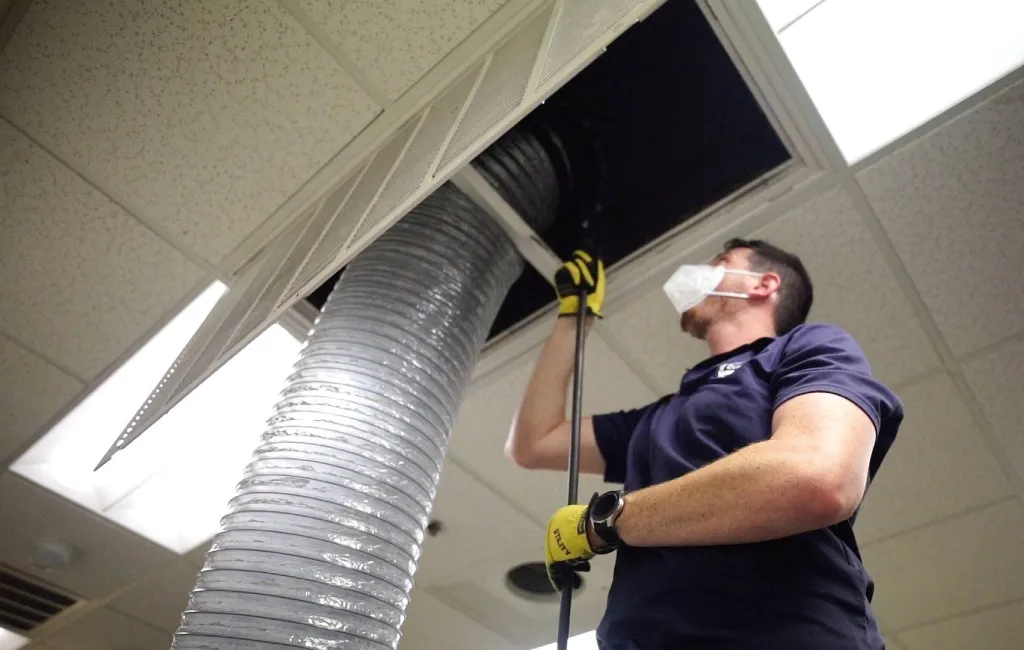
During setup, the technician locates all supply and return vents, maps out the duct layout, and connects the negative pressure unit to the main trunk line. This connection point is critical, because the vacuum needs to be attached at the right location to create suction through the entire system rather than just the nearest branch. A truck-mounted vacuum system provides more consistent suction than a portable unit, and how the technician manages this setup determines how well the cleaning phase works.
A thorough technician will also do a brief pre-clean assessment, sometimes using a camera to look inside the main trunk or inspect a few branch runs before any cleaning begins. This step identifies collapsed flex duct sections, blockages, or areas of visible mold growth that need to be handled carefully during the cleaning phase. This setup and inspection phase alone takes longer than some low-cost operators claim their entire job takes.
Phase 2: Active Duct Cleaning, Component by Component (90 to 240 Minutes)
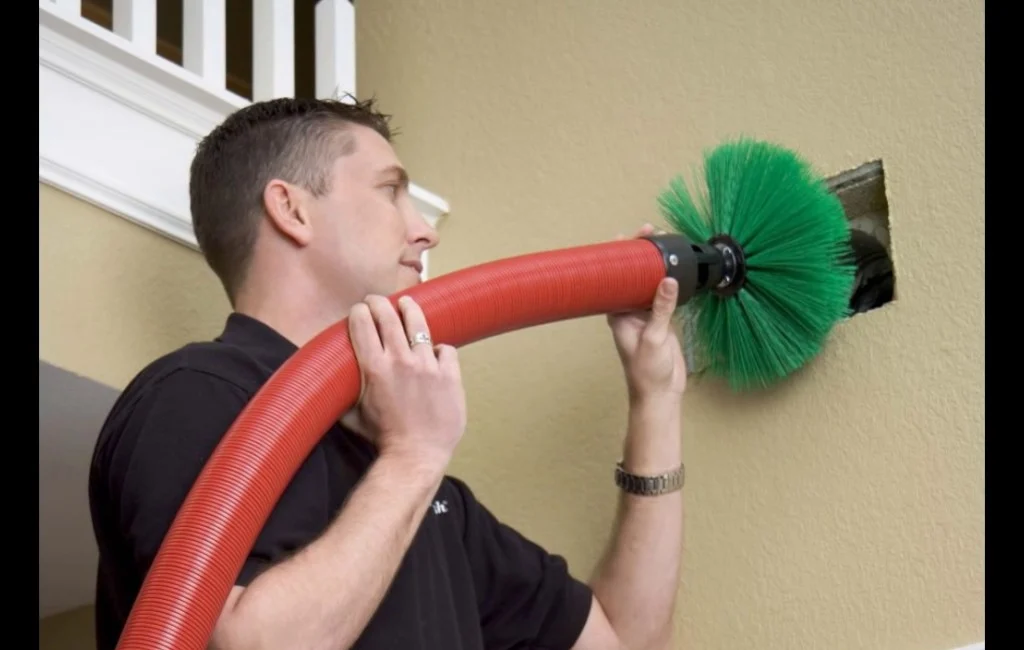
The active cleaning phase covers every part of your system that air moves through. Supply ducts and trunk lines are cleaned first under continuous negative pressure, using rotary brushes or compressed air whips to dislodge debris from duct walls while the vacuum captures it at the collection point. Return ducts, which pull air back toward the air handler, are often the dirtiest part of the system because they accumulate debris from every room in the home and rarely get the same attention as supply side ductwork.
The full system HVAC cleaning does not stop at the duct runs. The air handler cabinet is opened, and the evaporator coil, blower motor, and drain pan are all cleaned as part of a complete job. These components sit at the heart of your HVAC system and are consistently the most contaminated parts of the unit by the time a cleaning is overdue. Leaving them untouched while cleaning the duct runs is like washing the hallways of a house without touching the kitchen. The work looks done, but the source of the problem remains active.
Phase 3: Register Grille Cleaning and Post-Inspection (20 to 35 Minutes)
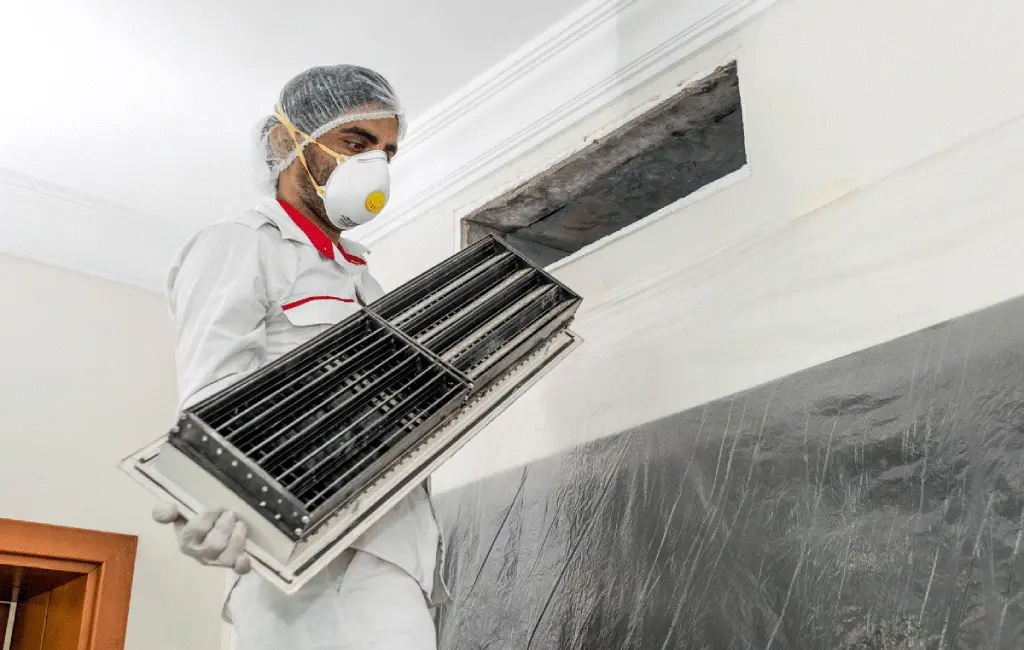
Each register grille cleaning step involves removing the grille from the wall, ceiling, or floor, cleaning the grille itself along with the duct opening behind it, and reinstalling it securely before moving to the next vent. This step takes longer than most homeowners anticipate because it is repeated for every single vent in the home, including floor registers, ceiling diffusers, and return air grilles. Rushing this phase is common in low-quality jobs, where grilles are left in place and only briefly vacuumed from the outside.
After the active cleaning and grille work are complete, a professional technician does a final walkthrough or camera inspection to verify that suction reached all branches of the duct system and that no sections were missed. This is also where a thorough company identifies any follow-up recommendations, such as damaged flex duct liner, moisture near the drain pan, or deteriorating duct insulation, and explains them to you without pressuring you into additional services on the spot. The post-inspection is the part of the appointment where a technician who did the work correctly has nothing to hide and plenty to show you.
Which Factors Make Air Duct Cleaning Take Longer in Texas?
Factors affecting air duct cleaning duration vary from home to home, but Texas creates a specific set of conditions that push many jobs toward the longer end of the range. Year-round HVAC use, high humidity in much of the state, attic-routed flex duct systems, and slab foundation construction all affect how long a technician needs to do the job correctly. National estimates for cleaning time are often based on northern or midwestern homes with different duct types, different usage patterns, and different contamination profiles than what technicians encounter in Texas.
Understanding which factors apply to your home helps you set realistic expectations before any technician arrives and gives you a basis for questioning a quote that seems unusually fast. The factors below are the ones that most consistently add time to a residential duct cleaning process in Texas homes.
Year-round HVAC operation: Texas homeowners run their systems roughly 9 to 11 months per year in most regions, compared to 5 to 7 months in northern states. More operating hours means more debris circulated through the system and greater buildup on duct walls, which means more time needed to dislodge and remove it thoroughly.
High humidity: Across much of Texas, particularly in Houston, San Antonio, and East Texas, humidity creates conditions where dust and moisture combine in ductwork and produce thicker, stickier deposits that take longer to clean safely.
Flex duct systems: Homes built after roughly 2000 in Texas predominantly use flex duct, which requires careful pressure management during cleaning to avoid tearing the inner liner, slowing the process compared to rigid sheet metal.
Duct accessibility: Attic-routed systems in Texas can be difficult to access, particularly in summer when attic temperatures reach extreme levels, which affects how efficiently a technician can work through the duct runs.
Contamination level: A system that has not been cleaned in five or more years will have significantly more buildup than one cleaned two years ago, and heavy ductwork contamination adds real time to every phase of the cleaning.
Equipment type: A truck-mounted vacuum system creates stronger, more consistent negative pressure than a portable unit, which often means the cleaning phase takes less time overall while producing a more thorough result.
The Texas A&M AgriLife Extension and the Environmental Protection Agency’s indoor air quality resources both offer background on how climate and system usage interact with indoor air quality in residential settings.
How Texas Climate and Year-Round HVAC Use Affect Contamination Levels
Air duct cleaning in Texas homes starts from a different baseline than most national content assumes. Because Texas HVAC systems run nearly year-round, the volume of air cycled through the duct system is significantly higher than in states with true off-seasons. More airflow means more dust, pollen, skin cells, and debris pulled through the return ducts and deposited along duct walls over time.
High humidity across much of the state compounds this. In humid climates, dust does not stay loose and powder-like inside ducts the way it does in dry environments. Instead, it combines with moisture and adheres to duct surfaces in layers that require more aggressive agitation and more careful suction management to remove without redistributing it back into the living space.
A system that has run through five or more Texas summers without a cleaning may require twice the active cleaning time of an equivalent home in a dry northern climate. That is not an exaggeration built to justify a higher bill. It reflects the real difference between loose debris that vacuums away quickly and compacted, moisture-bonded contamination that needs to be worked loose carefully before suction can capture it.
Why Texas Homeowners Choose Lara Air Duct Cleaning
Not every air duct cleaning company understands Texas homes. Year-round system operation, attic-routed flex duct baking in summer heat, and humidity that accelerates buildup inside your HVAC system are standard challenges here. Lara’s Air Duct Cleaning works in Texas homes specifically. That local knowledge shapes how every job gets done.
Your ductwork gets fully cleaned.
We clean the air handler, evaporator coil, blower motor, and drain pan. Not just the visible duct runs. Not a surface pass. Full system.
We know Texas homes built across every era.
Older sheet metal trunk systems. Modern all-flex attic configurations. Slab construction with flex runs hidden in crawlspaces. We understand what each one requires and what builds up inside during Texas summers.
You get an honest time estimate upfront.
We do not offer 45-minute whole-home cleanings. A job done correctly in a Texas home takes longer than that. Every pre-clean assessment tells us your home’s specific size, duct layout, and system condition. You get a realistic quote before we start.
Owner-operated means direct accountability.
The person cleaning your ducts is accountable to you. Not a subcontractor working a franchise route.
Spanish-language service available.
Our team communicates in English or Spanish so nothing gets lost in the process.
Free estimates before any work begins.
You know the full scope and time commitment before we ever start.
Serving Texas homeowners with local expertise, honest estimates, and full-system cleaning on every job.
FAQs
Q: How long does air duct cleaning take for a 2,000 square foot home in Texas?
A 2,000 square foot home in Texas typically takes 3 to 4 hours for a full-system professional cleaning. That estimate includes equipment setup, negative pressure cleaning of all supply and return ducts, air handler components, and a post-clean inspection. Homes with heavier contamination, difficult attic access, or multiple HVAC zones will fall toward the longer end of that range.
Q: Why did my neighbor’s cleaning only take an hour when mine took four?
The short answer is that one of those jobs was probably not a full cleaning. An air duct cleaning that covers every component of your HVAC system, including the duct runs, air handler, evaporator coil, and blower motor, cannot be completed in under 90 minutes in an average Texas home. A one-hour job almost always means only the visible vent areas were serviced and the mechanical components were left untouched.
Q: Does the number of vents affect how long the cleaning takes?
Yes, the number of vents is one of the two biggest factors in cleaning time, alongside home size. Each supply and return vent requires individual attention, including removal of the register grille, cleaning of the vent opening and duct branch, and reinstallation. A home with 22 vents will take meaningfully longer than a home with 12, even if the square footage is similar.
Q: Should I be home for the entire air duct cleaning appointment?
It is strongly recommended. The technician may discover issues during the cleaning, such as damaged flex duct, moisture near a drain pan, or a blockage in a branch line, and will need your input on how to proceed. You will also want to be present for the final walkthrough, where you can ask questions and confirm that all components were addressed before you sign off on the work.
Q: How do I know if my air ducts were actually cleaned thoroughly?
The most reliable indicator is time: a thorough whole-home cleaning takes at least 2 hours for a smaller home and 3 to 5 hours for most Texas residential properties. Beyond that, a complete job includes a post-clean walkthrough where the technician explains what was cleaned in each part of the system. If the air handler cabinet was never opened and the evaporator coil was never mentioned, those components were almost certainly not cleaned.
Conclusion
Now that you know what a legitimate air duct cleaning involves and how long it actually takes in a Texas home, you have everything you need to plan your appointment, evaluate any quote you receive, and hold any company you hire to a real standard.
A thorough whole-home cleaning in Texas takes 2 to 5 hours depending on your home’s size, vent count, and system condition, and larger or heavily contaminated systems can push that to 7 hours. Full-system cleaning covers far more than the visible duct runs: the air handler, evaporator coil, blower motor, drain pan, and every individual register grille are all part of a complete job. Texas homes face specific conditions that national averages do not account for, including year-round HVAC operation, high humidity in many regions, and attic-routed flex duct systems that require careful handling.
If you have been putting off air duct cleaning because you were unsure what to expect or how long it would take, you now have enough information to move forward with confidence. You know the questions worth asking before any technician starts work in your home, and you know the signs that tell you the job was done right.