Most homeowners never see the inside of their ductwork. That is exactly the problem. Over months and years, your HVAC system pulls air from every room in the house, passes it through filters, and pushes it back out through supply vents. Along the way, it picks up dust, pet dander and allergens, mold spores, bacteria and viruses, and in some cases rodent droppings and nests or insect infestation debris.
Your filter catches a portion of this. The rest coats the interior walls of your ducts, settles in return vents, and accumulates on components like the blower motor and assembly, evaporator coils, and drain pan. Once that layer builds thick enough, it starts recirculating indoor pollutants back into your living space with every cycle.
A professional technician does not just vacuum a few vents and leave. The entire process, done correctly, addresses the whole system from the trunk line access point to every supply and return vent in the building.
Here is what this guide covers:
- How professionals inspect and prepare your system before cleaning begins
- The specific tools and techniques used to dislodge and extract contaminants
- What source removal method means and why it matters
- How mold growth and mold spores are handled safely
- What post-cleaning verification looks like and what questions to ask
Pre-Cleaning Inspection: What Technicians Look For First
Air duct cleaning begins before any equipment enters your home. A qualified technician performs a pre-cleaning inspection to assess the current condition of your ductwork, identify any structural issues, and decide which cleaning method fits your system.
During this stage, the technician checks for visible dust and debris buildup at vent openings, signs of mold growth inside the ducts or near the air plenum, evidence of pest activity, disconnected or damaged flexible ducting, and any blockages in the trunk lines. They may use a camera to view sections of the duct that are not accessible by hand.
This step is not optional. NADCA standards, which are the benchmark guidelines set by the National Air Duct Cleaners Association, require that technicians inspect the system before cleaning begins. Skipping it means the crew might miss a mold problem, clean around a disconnected section, or underestimate the level of contamination.
You should receive a written service estimate after this inspection. That estimate should clearly describe what will be cleaned, which method will be used, and whether any additional treatments such as antimicrobial fogging are recommended. If a company skips the inspection and goes straight to cleaning, that is a red flag.
How the Source Removal Method Works
The source removal method is the standard approach recommended by NADCA for thorough ductwork decontamination. It uses continuous negative pressure vacuuming combined with mechanical agitation to physically dislodge and collect contaminants rather than simply moving them around.
The process works in two parts working together at the same time.
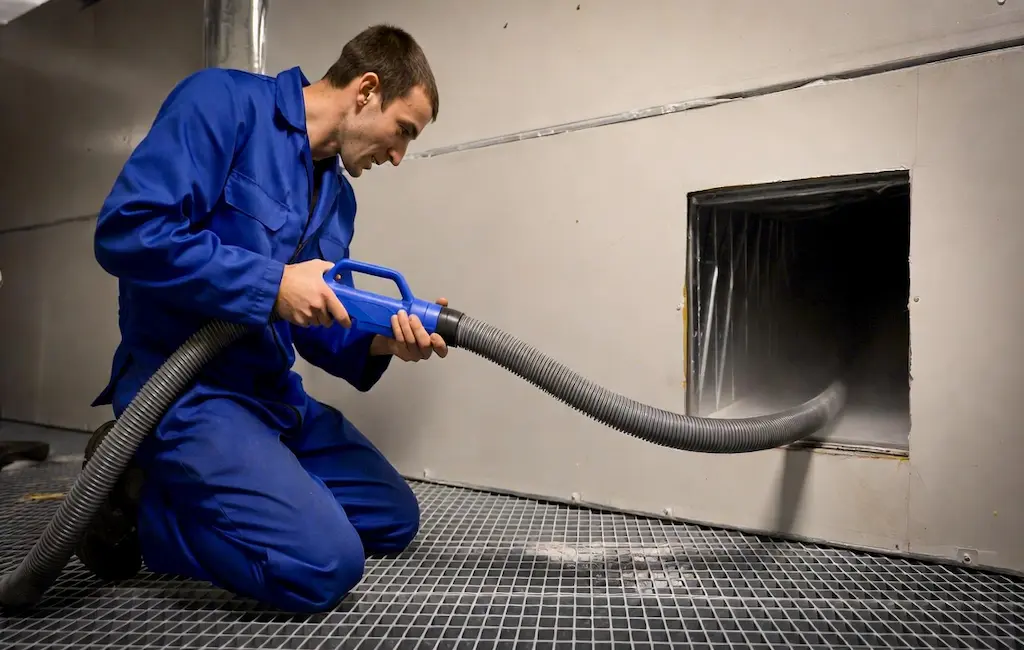
First, the technician connects a truck-mounted vacuum equipment unit or portable vacuum unit with a HEPA-filtered collection system to a trunk line access point. This creates a sustained vacuum inside the entire duct system. The negative air pressure technique pulls loosened debris toward the collection unit rather than letting it escape into the room.
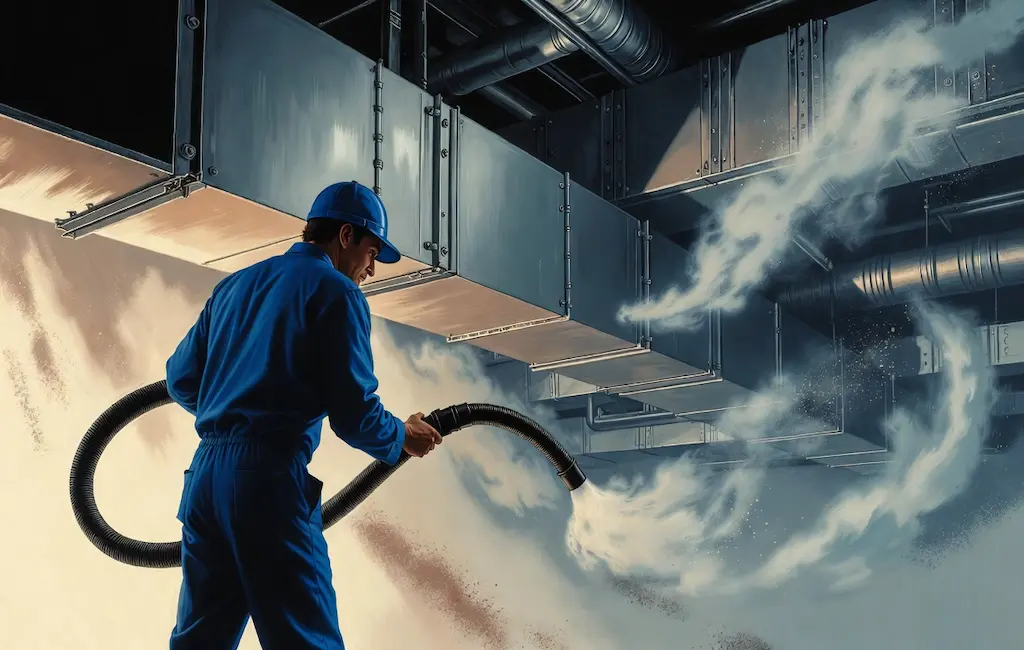
Second, while the vacuum runs continuously, the technician uses mechanical agitation tools to knock contaminants off the interior duct walls. These tools include rotary brushing attachments, an air whip method using a flexible hose that whips around the inside of the duct, and compressed air washing delivered through a brush-attached nozzle vacuuming system or a high-pressure air stream.
The combination is what makes this method effective. Negative pressure alone will not remove material that is stuck to duct walls. Agitation alone without containment just blows debris into your living space. Together, they physically remove material and capture it before it can spread.
According to the EPA, whole-system cleaning that addresses all components performs significantly better than spot cleaning of individual vents. Information Source: EPA Indoor Air Quality Guide on Duct Cleaning.
What Gets Cleaned Beyond the Ducts Themselves
Duct cleaning done to the ACR cleaning standard covers more than just the sheet metal ductwork. Whole-system cleaning means every component the air touches is addressed.
After the main duct runs are cleaned, the technician moves to the air handling unit itself. This includes cleaning the blower motor and assembly, which accumulates heavy dust buildup and can reduce airflow and motor efficiency over time. The evaporator coils are inspected and cleaned because coil fouling is one of the most common causes of reduced HVAC system maintenance performance. The drain pan is checked for standing water and biological growth. The heat exchanger surface may be inspected as well.
Vent covers and grills are removed during the process. The technician cleans inside the boot behind each vent before the cover goes back on. This vent cover removal and reinstallation step matters because debris trapped behind covers gets pushed back into the duct the moment the system runs again.
Air filter replacement is typically done at the end of the cleaning. There is no point installing a clean filter before the process because the cleaning itself generates dislodged material that will coat a fresh filter immediately.
If your system includes an air plenum, that section gets cleaned as well. The plenum is the distribution box that connects the main air handler to the trunk line network, and it often holds a significant concentration of settled debr
If you are in the Dallas area and want to know exactly what condition your system is in, Lara’s Air Duct Cleaning offers a thorough pre-cleaning inspection with no pressure and a written estimate before any work begins.
How Mold Spores in Air Ducts Are Handled
Mold growth inside ductwork requires a different approach than standard dust removal. If a technician finds active mold spores during the inspection, the cleaning process must include containment barriers and plastic covers over adjacent vents to prevent spores from becoming airborne in other areas of the house during agitation.
The physical removal process is the same: negative pressure, mechanical agitation, and HEPA-filtered collection. However, mold remediation typically adds a chemical cleaning agent application step after the physical removal. This involves applying an EPA-registered antimicrobial compound to the interior duct surfaces to address any remaining biological material and reduce the chance of regrowth.
After that, antimicrobial fogging may be used to treat the interior surfaces of ducts that cannot be reached by brush or direct spray. This is done with low-toxicity compounds approved for HVAC use and is not a substitute for physical source removal. Fogging without prior mechanical cleaning does not eliminate mold. It only treats the visible surface while material underneath remains.
It is also worth understanding where mold typically starts. In most cases, it originates near the evaporator coils or drain pan where condensation collects. Addressing those components directly is a necessary part of any mold-related duct cleaning job.
NADCA Standards and What Professional Certification Means
Not every company that offers duct cleaning follows the same process. NADCA standards exist to define what a thorough, effective cleaning looks like and to separate certified professionals from companies that offer low-cost services that deliver little real value.
Professional technician certification through NADCA requires training in the ACR cleaning standard, which defines minimum requirements for what gets cleaned, how it gets cleaned, and how results are verified. Certified technicians understand how to use a HEPA-filtered collection system properly, how to avoid cross-contamination between duct sections, and how to identify problems like disconnected flexible ducting or debris that cannot be safely removed without repairs.
When you hire a NADCA-certified company, you have a clear point of reference for what the job should include. You can ask directly whether the crew will clean the blower motor, address the evaporator coils, and perform a post-cleaning verification before they leave.
Post-cleaning verification is the final step of a properly conducted job. The technician should inspect accessible sections of the ductwork after cleaning, confirm the vacuum collection unit captured the debris, and document the result. Some companies use before-and-after photography as part of this step.
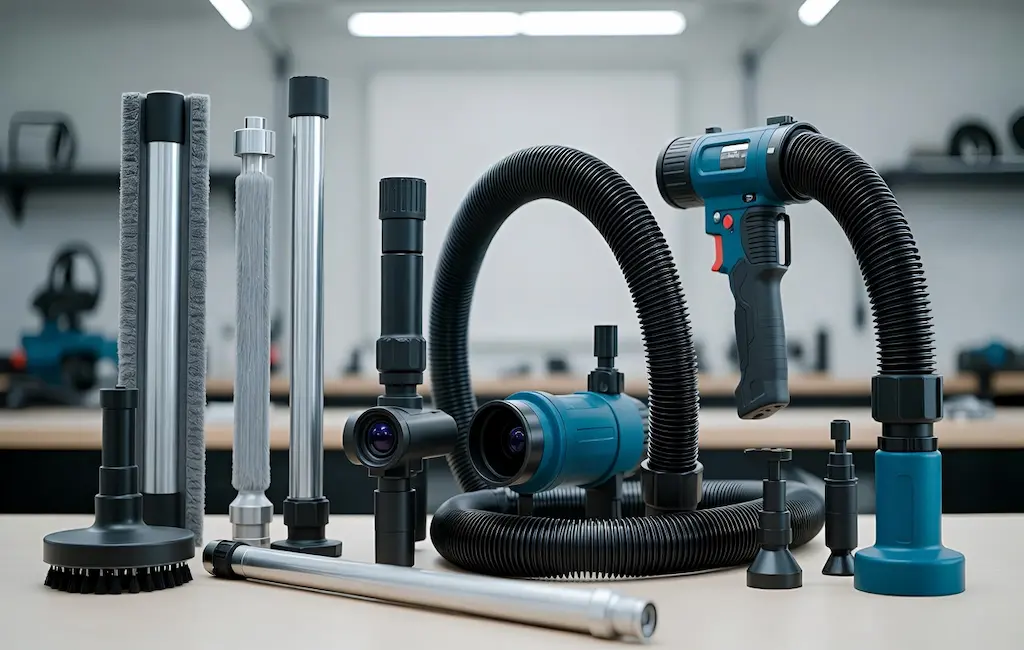
Air Duct Cleaning Tools and Equipment: A Practical Overview
The equipment used in HVAC system contaminant extraction varies by company and job size, but the core tools remain consistent across professional operations.
Truck-mounted vacuum equipment is the most powerful option. The vacuum unit stays outside the home and connects to the duct system through a large-diameter hose. This setup generates stronger suction than portable units and keeps the collection system entirely outside your home.
Portable vacuum unit setups are used when the home layout does not allow truck-mounted access or when the duct system is smaller. These units should still use HEPA filtration. A unit without HEPA filtration risks releasing fine particulate matter back into the air during the cleaning process.
For agitation, the rotary brush air duct cleaning method is the most common. A motor-driven brush on a flexible cable is fed through the duct and rotates against the interior surface, breaking loose compacted debris while the vacuum pulls it away. The air whip method uses a compressed air line to spin a flexible nozzle that slaps against duct walls, useful for areas the brush cannot reach. Compressed air washing tools deliver a high-pressure air stream directly against duct surfaces and are often used in combination with brush tools.
Each tool works best in specific situations. Brush attachments are effective in straight sheet metal ductwork. Air whip tools work well in flexible ducting where rigid brush entry is limited. Technicians trained to NADCA standards know which tool fits which section of the system.
Why Lara’s Air Duct Cleaning Is the Right Choice in Dallas, TX
Lara’s Air Duct Cleaning works specifically in the Dallas area and brings the kind of focused local experience that national franchise companies cannot match.
Whole-system approach, not spot cleaning:
Every job includes the full duct network, blower motor, evaporator coils, and vent covers. Nothing is skipped to cut time.
HEPA-filtered collection on every job:
The collection system captures fine particulate matter including mold spores, pet dander, and bacteria so it does not re-enter your home during cleaning.
Written estimate before any work begins:
You know exactly what the job includes and what it costs before the crew touches your system.
Mold-aware process:
When biological contamination is present, the team adjusts the process to include proper containment and EPA-registered antimicrobial treatment rather than cleaning over the problem.
Transparent post-cleaning verification:
The job is not finished until the system has been checked and the results confirmed, not just described.
FAQs About Air Duct Cleaning
How long does professional air duct cleaning take?
For an average home, the process takes between two and four hours. Larger homes or systems with significant contamination take longer. A thorough job cannot be completed in under an hour, and any company promising a very fast turnaround is likely not cleaning the full system.
How do I know if my ducts actually need cleaning?
Visible dust coming from vents when the system starts, a persistent musty smell when the HVAC runs, noticeable buildup around vent covers, or recent home renovation work are all reliable indicators. A pre-cleaning inspection will confirm whether cleaning is necessary.
Does duct cleaning improve indoor air quality right away?
Indoor air quality after duct cleaning typically improves within the first few days as the system begins circulating air through a clean pathway. The improvement is most noticeable for people with allergies or sensitivities to airborne particles.
Can I clean my air ducts myself?
Consumer vacuum attachments and brush kits can clean the first few inches behind a vent cover, but they cannot reach the deeper sections of the duct system, the blower motor, or the evaporator coils. Without continuous negative air pressure, any debris you dislodge will simply settle elsewhere in the system.
How often should air ducts be cleaned?
NADCA recommends having ducts inspected every two years and cleaned as needed based on the inspection findings. Homes with pets, recent renovations, known mold issues, or occupants with respiratory conditions may need cleaning more frequently.
What to Expect After the Job Is Done
Indoor air quality improvement after a proper cleaning is not always immediate in the dramatic sense, but the difference becomes clear over time. The system runs with less resistance, which supports HVAC efficiency restoration and can reduce energy costs. Vents deliver more consistent airflow. For households with allergy sufferers, the reduction in airborne particulates is typically the most noticeable change.
The work that goes into a real air duct cleaning job is significant. It requires the right equipment, trained technicians who follow a defined process, and a commitment to cleaning every component rather than just the accessible vents. When done correctly, it is one of the most direct investments you can make in the air your household breathes every day.
If you are ready to have your Dallas-area home’s duct system inspected and cleaned properly, contact Lara’s Air Duct Cleaning to schedule your pre-cleaning inspection. The team will assess your system honestly, provide a written estimate, and complete the job to NADCA standards. Reach out through website to get started.